I was traveling earlier this week and my flight was severely delayed due to bad weather. I ended up finally being able to get on a flight that left out a little after 11PM. The security line was insane! And I had to take a train to my gate. The trains were limited because it was so late at night, so the wait was long. It was crowded…it was hot, and I was exhausted. I was also carrying a bunch of stuff. It felt like everybody in sight was anxious about potentially missing their flight. I was trying to release some tension by rolling my head in circle. Before I could complete the motion, a young black male walked up to me looking just as anxious as everyone else and said, “Excuse me, my flight leaves at 11PM, do you think I should wait for the train…will I make my flight?” I wanted to blurt out, now how would I know. But instead, I looked at his flight information on his phone, looked at how much time we had until the train arrived and looked at the time (it was 10:20PM) and confidently said. “You’ll be fine. He gave me a look of relief, smiled and walked away like a weight had been lifted off his shoulders. I was still hot, tired and carrying way too much (literally and physically). But it made me feel good to be a soft place to land for him.
This social interaction made me think about all the times that people in my life have served as a soft place to land. And each time I’ve had this experience, black women or black girls have been at the helm of making me feel a sense of belongingness and providing me with a sense of safety and freedom. My friendships with black women have been a stabilizing force in my life…My friends have been a soft place for me to land through immeasurable grief, heartbreak, career confusion, and major life disruptions. And they have also been there to celebrate the really beautiful moments throughout my life.
Black girls have also been a major source of my own personal healing. Many years ago, when I was a high-school social worker, I went on a field trip with a group of sophomore girls. The New Orleans humidity was doing what New Orleans humidity does and my hair was expanding by the second. I had left my ponytail holder in my office, so by the time we arrived back to the school, my hair was huge!!! As soon as we walked into the building, I was laser focused on getting to my office to grab a ponytail holder. As soon as I walked into my office, I heard someone call my name. It was one of the girls from the field trip. Her hair was equally as frizzy as mine. She looked at me and said “Ms. Danielle look at my hair!” I looked back at her and said what’s wrong with it? It looks just like mine.” We both started laughing and I decided not to tame my hair with a ponytail holder. I just set it free. For the remainder of the school year, the student referred to herself as having “hair like Ms. Danielle.” I also noticed that other black girls at the school began referencing her hair texture as “having pretty hair, like Ms. Danielle.” It was such a sweet and affirming experience for me. It transformed the way I speak about my hair. It reframed my relationship with my hair and my concept of beauty. It was a soft and affirming place to land, when I was struggling with feeling uneasy about my thick and frizzy hair.
This particular experience was also a really transformative moment in my career, as I recognized that I felt beautiful, in this experience, and I wanted to explore more deeply, a career pathway that worked to create spaces where black women and black girls felt seen, affirmed and beautiful. The room is crooked, not us! And we deserve soft places to land that remind us of that.
Sharing some of my work below to expand soft places for black women and black girls to land:
An interview with Dr. Jess as part of BE NOLA’s Black Is Brilliant Summit.
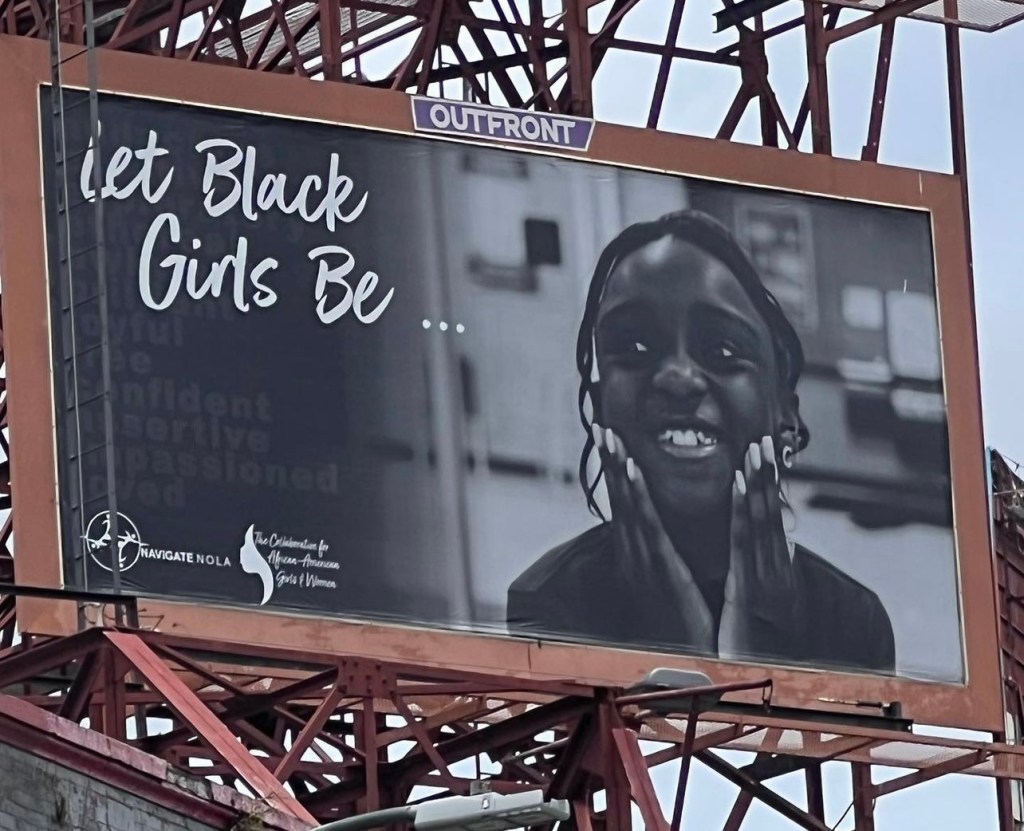
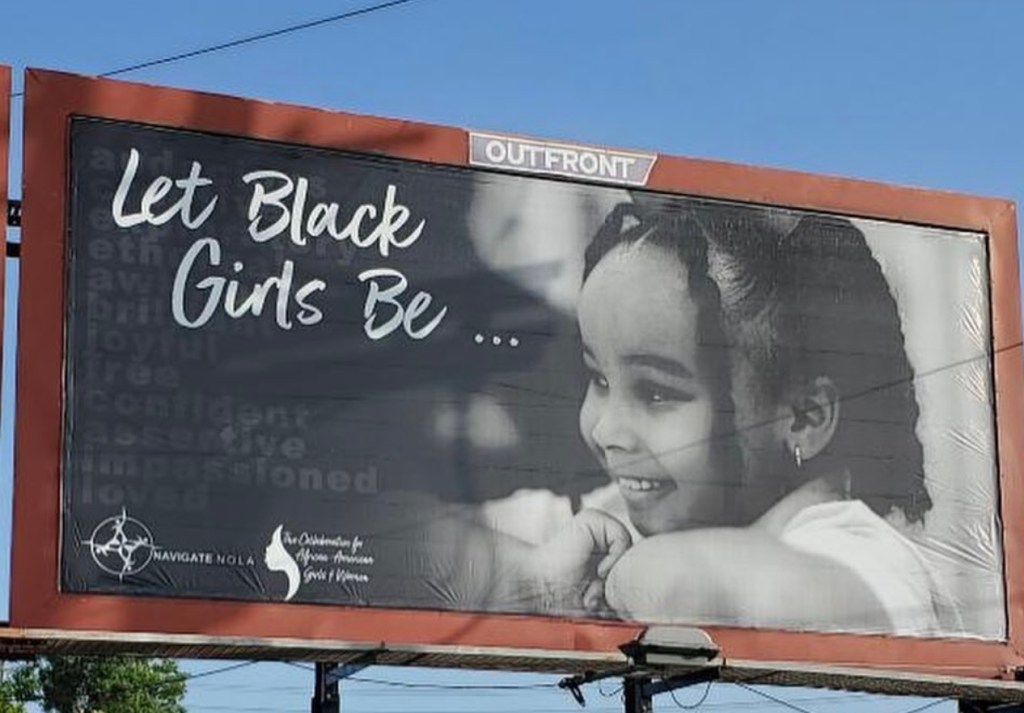
The Collaborative for African-American Girls and Women (CAAGW), a
powerhouse team of Black women leading organizations that serve black girls in the city of New
Orleans, unveils “Let Black Girls Be…”, a new campaign created by Navigate NOLA. The social
marketing campaign aims to dismantle racist and sexist attitudes towards black girls that give
rise to disparities across the systems with which black girls interface. The campaign’s call to
action is unique in that it positions behavior change as the product being marketed, calling on
the community at large to shift historically negative attitudes towards black girls and black
women to celebrating black girls and extending the same grace to black girls that is extended to
their white counterparts throughout girlhood.
 beautyxwellness.com